8 Pool Master
- 4.5
- Rating
- 10.00M
- Installs
- Free
- Price
 Analysis by App-foxy
I went into 8 Pool Master expecting a straightforward mobile billiards game, and that is exactly where its appeal begins. It does not need a complicated premise to work: the table, the cue, the aiming line, and the pressure of making one clean shot are enough to create a focused little sports session. After spending time with it, I see it as a free-to-play pool game for people who want quick practice and casual matches rather than a full simulation of professional billiards.
The game comes from ORANGE GAME and sits in the sports category. It is available for free, carries an Everyone age rating, and supports devices running Android 7.0 or later. Its current version is 1.5.2. Those details make it fairly approachable for players using older phones, although the overall experience still depends on how comfortable you are with touch controls and how much repetition you enjoy.
The public response is encouraging: the game has a 4.6 average from around 48 thousand ratings, with roughly 3.8 thousand written reviews and over 10 million installs. I would not treat those numbers as a guarantee that every player will enjoy it, but they do suggest that the simple pool format has found a broad audience. My own view is more specific: it works best when you want a compact, low-commitment game that still asks you to think before every shot.
You May Also Like

 Google Keep - Notes and lists
Google Keep’s Quiet Growth Shows the Appeal of Simpler Notes
As mobile work gets busier, Google Keep keeps winning a simple contest: capture a thought quickly, find it later, and get on with the day.

 Blood Strike: 2.5 Anniversary
Blood Strike’s Loadouts Turn Every Drop Into a Tactical Gamble
A close look at Blood Strike’s custom loadouts: how fast access to signature weapons reshapes its battle royale rhythm, rewards preparation, and narrows the gap between fights.

 Pandora - Music & Podcasts
Pandora’s Music Is Easy to Start, but Harder to Recover
Pandora’s strength is its low-effort path from a seed to a station. Its weak spot is how much confidence it asks you to place in connection, setup, and quiet recovery.

 8 Ball Pool
 Is Built on Rivalries, Rematches, and Routine
A close look at the rivalries, rematches, shared routines, and unanswered safety questions that turn a quick pool match into a persistent mobile community.

 Samsung Music
’s Quiet Strength Is Playing What You Already Own
Its reach comes less from spectacle than from dependable access to a personal library. That simplicity is both the app’s strongest retention engine and its ceiling.

 AccuWeather: Weather Radar
AccuWeather Review: A Quick, Clear Forecast for Everyday Decisions
For everyday plans, the best forecast is the one you can understand quickly. AccuWeather makes rain timing, radar, and local conditions easy to act on, with a few trade-offs.
More From Our News Desk



How the table creates its first impression
The first few minutes are easy to understand. You are looking at a pool table, choosing an angle, adjusting power, and trying to send the cue ball where you want it to go. That clarity matters on a phone because there is little patience for a long tutorial before the actual game begins. The basic interaction is familiar enough that a player who has used another mobile pool game can settle in quickly.
What I like about this opening is the way it puts the physical problem in front of you immediately. A shot may look obvious, but the cue ball can leave you with an awkward next position. That gives the game more substance than simply tapping the nearest target. Even in a short session, I found myself thinking about the second shot instead of only chasing the easiest ball on the table.
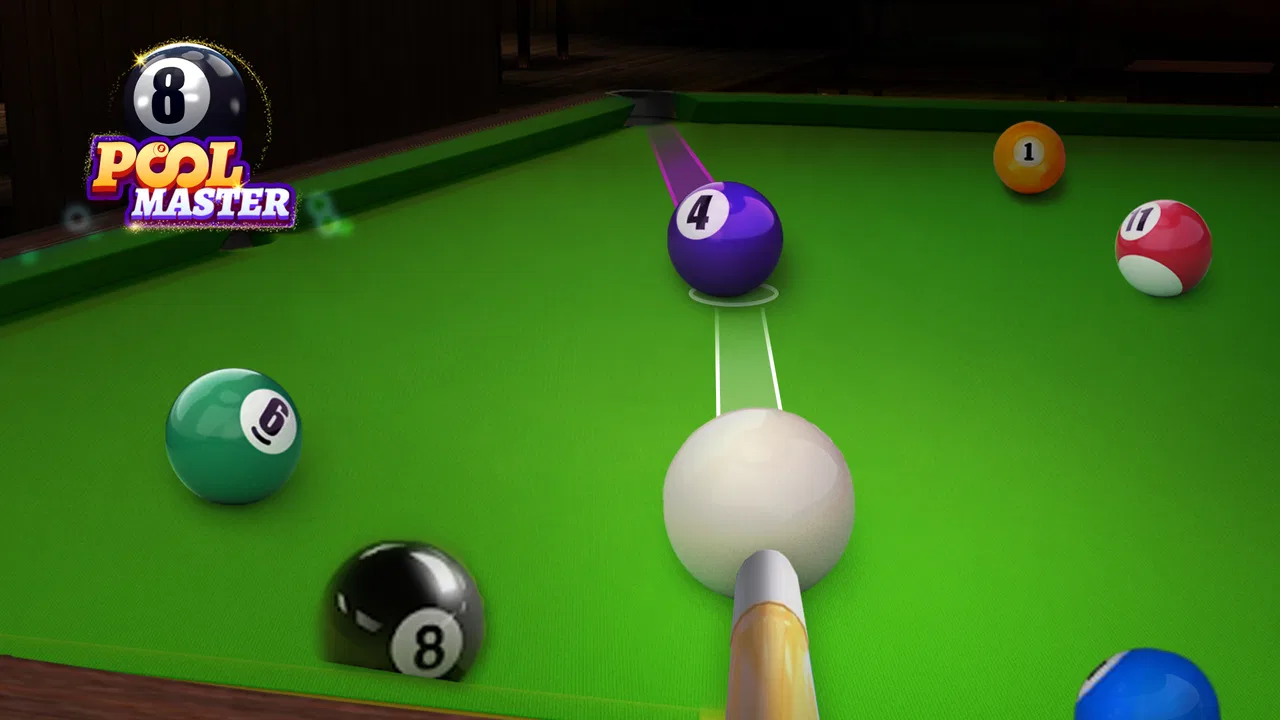
The presentation is functional rather than dramatic. The table is the main visual subject, and that is the right choice for this kind of game. There is no need for a huge fictional setting to explain why I should care about the next turn. The quiet concentration of lining up a shot provides the setting, while the clean sports-game presentation keeps attention on the geometry.
That restrained approach also reveals the first limitation. If you want a game packed with character, cinematic presentation, or a strong narrative world, this is not trying to be that. Its identity comes from the act of playing pool. Players who enjoy simple interfaces will probably appreciate the focus; players who need constant visual novelty may find the experience plain after repeated sessions.
A visual language built around concentration
The art direction communicates the game through recognizable pool imagery rather than through a large cast or elaborate environments. The table, balls, cue, and aiming process carry most of the visual language. I found that useful because it keeps the screen readable when I am making a difficult shot. A busy background would only make small aiming adjustments harder to judge.
There is also a subtle benefit to this kind of presentation: it makes mistakes feel understandable. When a shot fails, I can usually connect the result to my angle, power, or positioning instead of blaming a confusing screen. That is important in a sports game built around learning. The visual simplicity gives me information, even when it does not give me spectacle.
For everyday play, this makes the game a good fit for a short break. Imagine waiting for an appointment with only a few minutes available. I can open a session, take several deliberate shots, and stop without losing an entire evening. The game does not demand that I build a large fictional world in my head before enjoying it; the small world of the table is enough.
That same narrow focus means I would not choose it as my only sports game. A racing game can offer speed, a management game can offer long-term planning, and a more detailed billiards simulator may offer deeper control over real-world technique. This title is better understood as a compact pool activity: direct, repeatable, and centered on the satisfaction of a well-planned shot.
Why the setting works without becoming distracting
The setting is deliberately modest, but it supports the mood. Pool is naturally a game of pauses, angles, and controlled decisions, and the presentation does not fight that rhythm. I never felt that the interface was asking me to rush simply for the sake of excitement. The table gives each turn a small moment of suspense, then the result resets the problem for the next shot.
One useful way to approach it is to treat each turn as a position puzzle. Before moving the cue, I look at where the cue ball is likely to stop, not just whether I can pocket the chosen ball. This habit makes the game more satisfying and helps separate a thoughtful player from someone who simply aims at the nearest opening. It is a small change in mindset, but it gives the simple rules more depth.
I also recommend lowering the pace of your own play. The temptation on a phone is to drag, tap, and fire quickly, especially when a shot appears easy. That usually creates avoidable errors. Taking an extra moment to check the line and power makes the experience feel less random and turns the visual design into a practical tool rather than decoration.
Sound, silence, and the rhythm of a session
The sound design serves the table-first mood instead of trying to overpower it. In a pool game, the important audio moments are naturally small: the cue striking the ball, the contact between balls, and the final drop into a pocket. Those sounds give each shot a beginning and an ending. The result is a rhythm built from preparation, impact, and reaction.
I think that rhythm is one reason the game can feel relaxing even when I am losing. There is a pause before the shot, a brief burst of movement, and then a new position to examine. It is a much calmer loop than the constant alerts and rapid decisions found in many mobile sports games. The atmosphere comes from controlled repetition rather than from loud excitement.
That does not mean the game will suit every listening situation. If you prefer a rich soundtrack, commentary, or a strong sense of crowd energy, the understated audio approach may feel thin. I see this as a game that works well with the phone’s sound at a comfortable level, or even as a quiet activity when I want something to do without filling the room with noise.
The pacing is similarly measured. A good session is not about rushing through as many turns as possible; it is about staying attentive long enough to make better choices. When I play while distracted, the controls feel less forgiving because small changes in aim and power matter. When I give the table my full attention, even a short run feels purposeful.
Touch controls and the cost of small mistakes
The central mechanical question is whether the touch interaction gives me enough control to feel responsible for the outcome. In my experience, the game is most enjoyable when I treat aiming and power as separate decisions. First I establish the line, then I decide how firmly to strike. Combining both actions carelessly is a reliable way to miss a shot that looked simple.
This is also where the game asks for patience. A phone screen does not provide the same physical feedback as a real cue, so I have to rely on visual judgment. Players with larger fingers or smaller screens may need a little more care when making fine adjustments. I would not call that a reason to avoid the game, but it does mean that quick swipes are not always the best method.
A practical routine helped me. I first identify the intended pocket, then check whether the cue ball has a clear path to the object ball, and finally consider where the cue ball may finish. If the shot is risky, I choose a safer option rather than forcing a difficult angle. This turns each turn into a three-step decision and reduces the feeling that success depends on luck.
The game is also more rewarding when I accept defensive thinking. Not every turn needs to produce a spectacular pocket. Sometimes the better choice is the shot that leaves a manageable position afterward. That is a non-obvious strength of a simple pool game: it can quietly teach planning because the table shows the consequences of careless positioning immediately.
Where it fits beside other pool games
Compared with a basic offline pool toy, this game feels more purposeful because the act of aiming is the center of the experience rather than a tiny side activity. Compared with a dedicated billiards simulator, however, it is likely to feel lighter and more accessible. I would choose this one when I want the recognizable pleasure of pool without committing to a highly technical simulation.
That trade-off is important. A specialist player looking for detailed real-world practice may prefer an alternative with more precise cue-ball modeling, advanced shot controls, or a larger competitive structure. Someone who mainly wants to pass time on a phone may prefer this game because its rules are easy to understand and its sessions can remain compact.
The free entry point helps with that decision. I can try the core experience without paying first, which makes it easier to judge whether the touch controls suit me. The game does include in-app purchases ranging from $1.99 to $69.99 per item, so players should approach optional spending carefully. I would recommend treating the free version as the test: only consider purchases if the game already feels enjoyable without them.
That advice is especially relevant for younger players, even though the content rating is Everyone. A family-friendly age rating describes the type of content, not how quickly optional purchases can add up. If the device is shared, I would use the usual purchase safeguards and make sure everyone using it understands that free installation does not mean every item is free.
Who will enjoy it, and who should skip it
I would recommend 8 Pool Master to casual sports players, pool fans who want a phone-friendly version of the game, and anyone who enjoys short sessions based on careful decisions. It is also a reasonable choice for people who dislike complicated controls. The central loop is easy to grasp, but it leaves enough room for better positioning and more disciplined shot selection.
I would be less likely to recommend it to someone who needs a strong story, a highly social atmosphere, or constant progression variety. The table is the attraction, so repetition is part of the design. If you lose interest once you understand the basic shot pattern, the game may not hold you for long. Likewise, players searching for a serious replacement for time at a real pool hall should keep their expectations modest.
It works particularly well as a small reset between tasks. I can play a few turns after finishing a work call, during a short commute when it is safe and appropriate to use a phone, or while waiting for food. The focused nature of the game gives me something to concentrate on without requiring a long setup. I would not use it when I need a completely passive distraction, because good play requires attention.
Another useful scenario is practice through repetition. Rather than measuring every session by wins, I can use it to improve one habit: softer shots, better cue-ball placement, or more careful planning before committing. That makes the game more valuable than a quick time filler. It becomes a small exercise in visual estimation, even though it remains casual entertainment.
Small habits that make the game feel better
My first tip is to stop aiming only for the current pocket. Look at the likely resting place of the cue ball and ask whether the next shot will be comfortable. This is the easiest way to make the game feel deeper without adding any complicated settings. It also helps explain why a safe shot can be better than an impressive but fragile one.
My second tip is to use a consistent pre-shot routine. I check the target, review the path, set the power, and only then commit. Repeating those steps makes poor results easier to diagnose. If the line was correct but the ball stopped short, I know the issue was power; if the cue ball ended badly, I need to think more about positioning.
My third tip is to avoid judging the game by a single unlucky turn. Pool naturally contains moments where a small error changes the whole table. I prefer to play several short sessions before deciding whether the controls suit me. The game rewards a calm approach, and impatience can make its mechanics seem less precise than they feel when handled carefully.
Finally, I would keep spending separate from skill. Optional items cannot replace the satisfaction of reading the table well, and the free starting point is enough to discover whether the basic loop works for you. If you are already enjoying the game, decide on purchases deliberately rather than treating them as part of every session.
My verdict on the atmosphere and the play
8 Pool Master creates a coherent mood by keeping its art direction, sound, setting, and pacing close to the nature of pool itself. The table is the world, the cue strike supplies the punctuation, and the pauses between shots create the tension. That unity is more valuable here than flashy presentation would be. The game feels most confident when it asks me to slow down and read the next position.
Its weaknesses come from the same simplicity. The experience may feel repetitive for players who want a broad sports package, and the touch controls require care when a shot demands precision. The optional purchase range also means free-to-play users should remain aware of spending, particularly on shared devices. These are real considerations, but they do not erase the central appeal.
For me, the best reason to try it is that it turns a familiar sport into a focused mobile routine. I can open it for a few minutes, make meaningful decisions, and leave without needing to learn a large system. It is not the right substitute for a deep billiards simulator or a content-heavy sports title. It is a better fit for someone who wants a clean, approachable pool game with a calm rhythm and enough mechanical consequence to reward thought.
In the end, I would recommend giving it a fair trial if you enjoy billiards and prefer games that let the action speak for itself. The strongest experience comes from treating every shot as a small piece of planning rather than rushing toward the pocket. When I play that way, the modest presentation becomes an advantage: fewer distractions, clearer choices, and a surprisingly satisfying sense of control when the table finally opens up.
FAQs for 8 Pool Master
01What is 8 Pool Master and what features does it offer?
8 Pool Master is a highly engaging mobile billiards game designed for both Android and iOS platforms. It offers a realistic pool-playing experience with various modes including solo play, multiplayer, and tournaments. The app features intuitive controls, customizable tables and cues, and an in-game chat system, enhancing the social gaming experience.
02Is 8 Pool Master free to play, and are there in-app purchases?
Yes, 8 Pool Master is free to download and play. However, it does offer in-app purchases for items such as premium cues, table designs, and additional game currency. These purchases are optional, but they can enhance gameplay by providing aesthetic upgrades and unlocking advanced features more quickly.
03Does 8 Pool Master require an internet connection?
8 Pool Master requires an internet connection for multiplayer modes and tournaments to ensure real-time gameplay and communication with other players. However, there are offline modes available where you can practice or play solo against AI opponents without needing to be connected to the internet.
04How does the matchmaking system work in 8 Pool Master?
The matchmaking system in 8 Pool Master pairs players based on their skill level and rank, ensuring fair and competitive matches. The game uses an advanced algorithm to match players with similar skill levels, which helps create a balanced and enjoyable gaming experience for everyone involved.
05What kind of support and updates can players expect from 8 Pool Master?
Players can expect regular updates from 8 Pool Master that include new features, bug fixes, and improvements to gameplay. The developers are active in addressing player feedback and often release updates to enhance the game. Additionally, there is customer support available to assist with any technical issues or inquiries players may have.
Pros
- Simple and intuitive interface
- Realistic physics engine
- Variety of game modes
- Multiplayer features enhance gameplay
- Regular updates with new content
Cons
- Ads can be intrusive
- In-app purchases can be pricey
- Requires a stable internet connection
- Occasional lag in multiplayer mode
- Limited customization options

8 Pool Master
Gallery